Pest Library

German Cockroach

The German cockroach Croton bug or Steam fly (Blattella germanica) is a small species of cockroach.  It measures about 1.3 cm (0.51 in) to 1.6 cm (0.63 in) long, but they are known to get bigger. It can be from tan to brown to almost black, and has two dark parallel streaks running from the head to the base of the wings. Although it has wings, it is unable to sustain flight. The German cockroach is one of the most common and prominent household cockroaches in the world, and can be found throughout many human settlements. These insects are particularly fond of inhabiting restaurants, food processing facilities, hotels, and nursing homes. In colder climates, they are found only near human habitats, since they are not very tolerant to cold. However German cockroaches have been found as far north as Alert, Nunavut. It is originally from Asia, and is closely related to the Asian cockroach. To the casual observer the German and Asian cockroach appear nearly identical and may be mistaken for the other. The German cockroach can be seen in the day occasionally, especially if there is a large population or if they have been disturbed. However, sightings are most commonly reported in the evening hours as they are most active at night.


American Cockroach

The American cockroach (Periplaneta americana), also known as the Palmetto Bug or Waterbug, particularly in the southern United States, is the largest species of common cockroach, and often considered a pest. It is native to the Southern United States, and common in tropical climates. Human activity has extended the insect’s range of habitation. Specimens have been observed in eastern North American cities as far north as New York City, Toronto, and Montreal, though its intolerance to cold restricts it to human habitations. Global shipping has transplanted the insects to world ports including Tenerife (Spain), Southern Spain, Greece, Taiwan,  Cape Town and Durban, South Africa. The insect is believed to have originated in Africa, but had become established in the southern U.S. by the time that it was given its name.


The Brown-banded Cockroach

The brown-banded cockroach (Supella longipalpa) is a small species of cockroach, measuring about 5/8 in. (10 to 14 mm) long. It is tan to light brown and has two light-colored bands across the wings and abdomen.  The wings may sometimes appear to be broken or irregular, but are quite noticeable. The bands may be partly obscured by the wings. The male has wings that cover the abdomen, while the female has wings that do not cover the abdomen completely. The male appears more slender than the female, and the female appears wider. The brown-banded cockroach has a fairly wide distribution, being found in the northeastern, southern, and midwest regions of the United States quite commonly. The brown-banded cockroach is one of the most recent alien cockroaches to form breeding colonies in Britain and Ireland. They need less moisture than the German cockroach so they tend to be more broadly distributed in the home, such as in living rooms and bedrooms. They can often be found in homes and apartments, but are less common in restaurants. The brown-banded tend not to be found in the daytime, since they avoid light. This cockroach eats a wide variety of items and are usually scavengers.  They can eat often almost anything organic, including decaying matter. Brown-banded cockroaches have been known to cause problems in hospitals by emerging at night to feed on bodily fluids, thereby risking cross-infection.


Oriental Cockroach

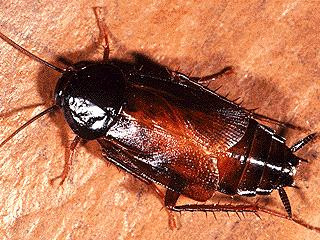
The oriental cockroach (Blatta orientalis), also known is waterbug,  is a large species of cockroach that measures about 1 in. (2.5 cm) in length at maturity. It is dark brown to black in colour and has a glossy body. The female Oriental cockroach has a somewhat different appearance to the male, appearing to be wingless at casual glance but has two very short, useless wings just below its head and has a wider body than the male. The male has long, brown wings, which cover a majority of its body, which is more narrow. The odd male is capable of very short flights, ranging from 2 to 3 meters. The female oriental cockroach looks somewhat similar to the Florida woods cockroach and may be mistaken for it.


Argentine Ant

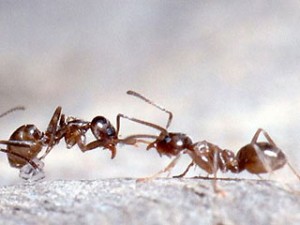
The Argentine ant (Linepithema humile, formerly Iridomyrmex humilis) is a dark ant native to northern Argentina, Uruguay, Paraguay, and southern Brazil. It is an invasive species that has been established in many mediterranean climate areas, inadvertently introduced by humans to many places, including South Africa, New Zealand, Japan, Easter Island, Australia, Hawaii, Europe, and the United States. These ants can easily squeeze through cracks and holes no more than 1 mm (0.039 in) in size. Queens are two to four times the length of workers. These ants will set up quarters in the ground, in cracks in concrete walls, in spaces between boards and timbers, even among belongings in human dwellings. In natural areas, they generally nest shallowly in loose leaf litter or beneath small stones, due to their poor ability to dig deeper nests. However, if a deeper nesting ant species abandons their nest, Argentine ant colonies will readily take over the space. Argentine ants are a common household pest, often entering structures in search of food or water (particularly during dry or hot weather), or to escape flooded nests during periods of heavy rainfall. Argentine ant colonies almost invariably have many reproductive queens, as many as eight for every 1,000 workers, so eliminating a single queen does not stop the colony’s ability to breed. When they invade a kitchen, it is not uncommon to see two or three queens foraging along with the workers.


Acrobat Ant

Acrobat ants are small to medium sized ants, generally 2.6 to 3.2 mm long. They have very shiny bodies that are variable in color,  from light red to brown or black. An acrobat ant’s most distinguishing characteristic is its heart-shaped gaster that is held up over its thorax when disturbed. Acrobat ants may nest both outdoors and indoors. Outdoor nests are most often in dead and decaying wood such as logs, stumps, dead trees limbs, firewood and hollow tree cavities. They may nest in damp soil beneath leaf litter or rocks. The small worker ants readily enter buildings through cracks around windows and doors and other openings. Trails of workers may be seen moving between the nest and a food source. Acrobat ants feed on a variety of foods, including other insects and sweets. When acrobat ants nest indoors they are usually inside wood or cavities kept moist with water from leaks. They may also nest in foam insulating board or sheathing. As they excavate the large galleries used as nest sites, sawdust may be deposited near the nest area.

Odorous House Ant

Tapinoma sessile is a species of ant that goes by the common names odorous house ant and coconut ant. This species is a scavenger-predator ant that will eat most household foods, especially those that contain sugar, and other insects. Indoors they will colonize near heat sources or in insulation. In hot and dry situations, nests have been found in house plants and even in the lids of toilets. Outdoors they tend to colonize under rocks and exposed soil. They appear, however, to form colonies virtually anywhere, in a variety of conditions. They can trail extensive distances, usually along landscape edges, though their trails are rarely longer than 50 feet. Colonies range in size from 100 to 10,000, and house several queens, as many as 200 in some instances. Odorous house ants are non-aggressive. While queens can lay as many as 20 to 30 eggs in a single day, they lay only 1 to 2 eggs, or less,  per day on average over long periods of time. A typical time to devvelop into the adult phase is 34-38 days for these ants. It is believed that queens and male ants are only produced in larger colonies.


Pharaoh Ant

The pharaoh ant (Monomorium pharaonis) is a small 2 mm, yellow or light brown, almost transparent,  ant notorious for being a major indoor nuisance pest, especially in hospitals. The origin of this “tramp” ant is uncertain, although favoured alternatives include West Africa and Indonesia. The Pharaoh ant has been introduced to virtually every area of the world including Europe, the Americas, Australasia and Southeast Asia. Pharaoh ants are a tropical species, but they thrive in buildings anywhere, even in temperate regions where central heating is present.

Carpenter Ant

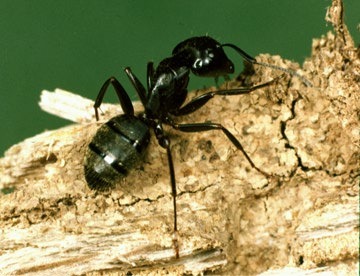
Carpenter ants are large ¼ to 1 in. ants indigenous to many parts of the world. They prefer dead, damp wood in which to build nests. Sometimes carpenter ants will hollow out sections of trees. The most likely species to be infesting a house in the United States is the Black carpenter ant (Camponotus pennsylvanicus). However, there are over a thousand other species in the genus Camponotus.

Crazy Ant

The yellow crazy ant (Anoplolepis gracilipes) is a species of ant, introduced accidentally to northern Australia and Christmas Island in the Indian Ocean, and is a pest in both locations. They are colloquially called “crazy” because of their erratic movements when disturbed, and are one of the largest invasive ants species in the world. Along with the red imported fire ant (Solenopsis invicta), the big-headed ant (Pheidole megacephala), the little fire ant (Wasmannia auropunctata), and the Argentine ant (Linepithema humile), the yellow crazy ant is one of the five species of tramp ants, known for invasive behavior and devastating ecological effects. Also known as the long-legged or Maldive ant, it has also been listed among the 100 most devastating invaders of the world. It has invaded ecosystems from Hawaii to Seychelles, and formed supercolonies on Christmas Island in the Indian Ocean.

Roof Rat

The black rat (Rattus rattus), also known as ship rat, roof rat, house rat, Alexandrine rat,  and old English rat is a common long-tailed rodent of the genus Rattus  in the subfamily Murinae (murine rodents). The species originated in tropical Asia and spread through the Near East in Roman times before reaching Europe by the 6th century and spreading with Europeans across the world. Today it is again largely confined to warmer areas, having been supplanted by the brown rat (Rattus norvegicus) in cooler regions.

Norway Rat

The Norway (Rattus norvegicus), also known as ratbrown rat, common rat, sewer rat, Hanover rat, Brown Norway rat, Norwegian rat, or wharf rat,  is one of the best known and most common rats. One of the largest muroids, it is a brown or grey rodent with a body up to 25 cm (10 in) long, and a similar tail length.  The male weighs on average 350 g (12 oz) and the female 250 g (9 oz). Thought to have originated in northern China, this rodent has now spread to all continents, except Antarctica, and is the dominant rat in Europe and much of North America making it the most successful mammal on the planet after humans. Indeed, with rare exceptions, the brown rat lives wherever humans live, particularly in urban areas.

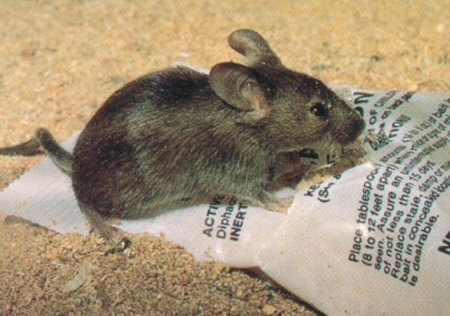
House Mouse

The house mouse (Mus musculus) is a small rodent and one of the most numerous species of the genus Mus. As a wild animal, the house mouse mainly lives associated with humans, causing damage to crops and stored food. The house mouse has been domesticated as the pet or fancy mouse, and as the laboratory mouse which is one of the most important model organisms in biology and medicine. It is by far the most commonly used genetically altered laboratory mammal.

Brown Recluse Spider

The brown recluse spider (Loxosceles reclusaor) or violin spider is a well-known member of the family Sicariidae (formerly placed in a family “Loxoscelidae”). Brown recluse spiders are usually between 6-20 mm (¼ in and ¾ in), but may grow larger. They may be brown, gray, or a deep yellow color and usually have markings on the dorsal side of their cephalothorax, with a black line coming from it that looks like a violin with the neck of the violin pointing to the rear of the spider, resulting in the nicknames fiddleback spider, brown fiddler or violin spider.

Wolf Spider

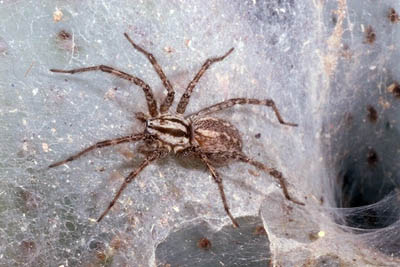
Wolf spiders are members of the family Lycosidae. They are robust and agile hunters with good eyesight. They live mostly solitary lives and hunt alone. Some are opportunistic wanderer hunters, pouncing upon prey as they find it or chasing it over short distances. Others lie in wait for passing prey, often from or near the mouth of a burrow. Wolf spiders resemble Nursery web spiders (family Pisauridae), but they carry their egg sacs by attaching them to their spinnerets (Pisauridae carry their egg sacs with their chelicerae and pedipalps). Wolf spiders have two eyes out of eight that are large and prominent. The eight eyes of the Nursery web spiders are all of approximately equal size.

Funnel Web Spider

The Sydney funnel-web spider (Atrax robustus), is a notoriously dangerous Australian funnel-web spider, usually found within a 100 km (62 mi) radius of Sydney, New South Wales, Australia.  The spider can be very aggressive when provoked. The long-lived female funnel-webs spend most of the time in their silk-lined tubular burrow retreats. Males, recognized by the modified terminal segment of the palp, tend to wander during the warmer months of the year looking for receptive females to mate with. They are attracted to water and hence are often found in swimming pools, into which they often fall while wandering. The spiders can survive such immersion for up to twenty-four hours and can deliver bites when removed from the water.

Eastern Subterranean Termite

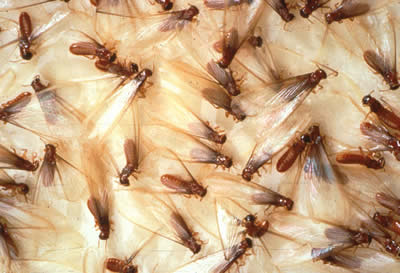
The Eastern subterranean termite (Reticulitermes flavipes) is the most common termite in North America. They are the most economically important wood destroying insects in the United States and are classified as pests. They feed on cellulose material such as structural wood, wood fixtures, paper, books,and cotton. A mature colony can range from 20,000 workers to a high of 5 million workers and the queen of the colony can add 5,000 to 10,000 eggs per year to the total.

Formosan Subterranean Termite

The Formosan subterranean termite (Coptotermes formosanus) is an invasive species of termite.  It has been transported worldwide from its native range in southern China to Formosa, Taiwan, where it gets its name and Japan. In the 20th century it became established in South Africa, Hawaii and in the continental United States.

Centipede

Centipedes, from Latin prefix “centi” meaning hundred and ”pes” or “pedis” meaning foot,  are arthropods belonging to the class Chilopoda and the Subphylum Myriapoda. They are elongated metameric animals with one pair of legs per body segment. Despite the name, centipedes can have a varying number of legs from under 20 to over 300. All centipedes, discounting individual mutants, always have an odd number of pairs of legs.  A key trait uniting this group is a pair of venom claws or forcipules formed from a modified first appendage. This also means that centipedes are an exclusively predatory taxon, which is uncommon.

Millipede

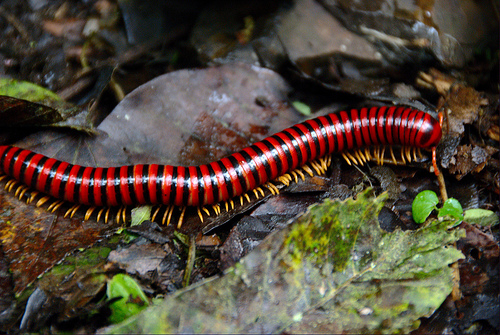
Millipedes are arthropods that have two pairs of legs per segment, except for the first segment behind the head which does not have any appendages at all, and the next few which only have one pair of legs. Each segment that has two pairs of legs is a result of two single segments fused together as one. Most millipedes have very elongated cylindrical bodies, although some are flattened dorso-ventrally, while pill millipedes are shorter and can roll into a ball, like a pillbug.

Squirrel

Squirrels belong to a large family of small or medium-sized rodents called the Sciuridae. The family includes tree squirrels, ground squirrels, chipmunks, marmots (including woodchucks), flying squirrels, and prairie dogs. Squirrels are indigenous to the Americas, Eurasia, and Africa and have been introduced to Australia. Squirrels are first attested in the Eocene, about forty million years ago, and are most closely related to the mountain beaver and to dormice among living species.

Chipmunk

Chipmunks are small squirrel-like rodents of the genus Tamias. They are native to North America and Asia. Depending on species, chipmunks can be gray to reddish-brown in color with contrasting dark and light stripes on the sides of their face and across their back and tail. They range in size from 18.5 to 21.6 cm. (7.2 to 8.5 in.) to 28 cm. (11 in.). Chipmunks generally gather food on the ground in areas with underbrush, rocks, and logs, where they can hide from predators like hawks, foxes, coyotes, weasels, and snakes. They feed on insects, nuts, berries, seeds, fruit, and grain which they stuff into their generous cheek pouches and carry to their burrow or nest to store. Chipmunks hibernate, but instead of storing fat, they periodically dip into their cache of nuts and seeds throughout the winter. Ranging from Canada to Mexico, they are generally seen scampering through the undergrowth of a variety of environments from alpine forests to shrubby deserts. Some dig burrows to live in, complete with tunnels and chambers, while others make their homes in nests, bushes, or logs.

Opossum

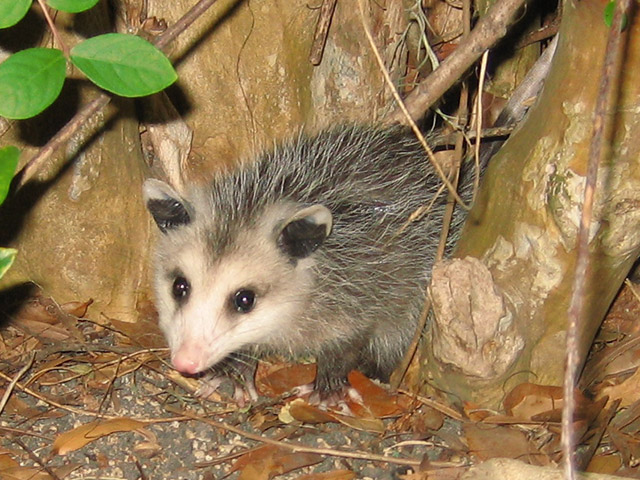
Didelphimorphia is the order of common opossums of the Western Hemisphere. They are commonly also called possums, though that term is also applied to Australian fauna of the suborder Phalangeriformes. The Virginia Opossum is the original animal named opossum. The word comes from Algonquian wapathemwa meaning “white dog”. Opossums probably diverged from the basic South American marsupials in the late Cretaceous or early Paleocene. A sister group is Paucituberculata (shrew opossums). Opossums are small to medium-sized marsupials, with the largest just exceeding the size of a large house cat, and the smallest the size of a mouse. Opossums are usually solitary and nomadic, staying in one area as long as food and water are easily available. Some families will group together in ready-made burrows or even under houses. Though they will temporarily occupy abandoned burrows, they do not dig or put much effort into building their own. As nocturnal animals, they favor dark, secure areas. These areas may be below ground or above. When threatened or harmed, they will “play possum”, mimicking the appearance and smell of a sick or dead animal. When playing possum, the lips are drawn back, teeth are bared, saliva foams around the mouth, and a foul-smelling fluid is secreted from the anal glands. Their stiff, curled form can be prodded, turned over, and even carried away. The animal will regain consciousness after a period of minutes or hours and escape.

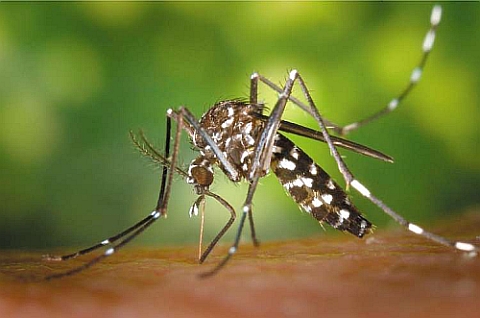
Asian Tiger Mosquito

The Asian Tiger Mosquito or Forest Day Mosquito (Aedes Stegomyia albopictus), from the mosquito family Culicidae, is characterized by its black and white striped legs, and small black and white body. It is native to the tropical and subtropical areas of Southeast Asia. However, in the past couple of decades, this species has invaded many countries throughout the world through the transport of goods and increasing international travel. This mosquito has become a significant pest in many communities because it closely associates with humans, rather than living in wetlands, and typically flies and feeds in the daytime in addition to at dusk and dawn.

Earwig

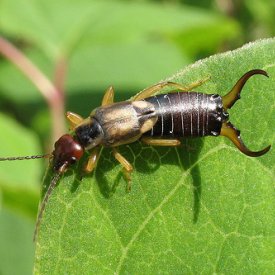
Earwigs, sometimes called pincerbugs, make up the insect order Dermaptera. The order is relatively small among other insect orders, with only 1,800 recorded species in 12 families, found throughout the Americas, Eurasia and Australia. Typical earwigs have characteristic cerci, a pair of forceps-like pincers on their abdomen, and membranous wings folded underneath short forewings, hence the literal translation of the scientific name for order “skin wings”. Some groups within the earwig order are tiny parasites on mammals and lack the typical pincers. Earwigs can fly, but rarely do so.

Silverfish

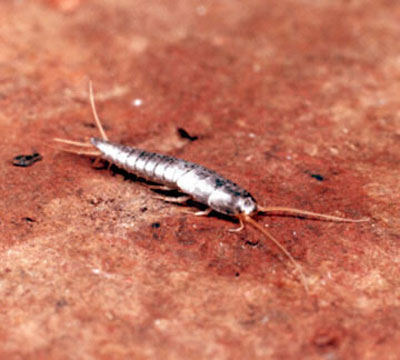
Lepisma saccharina, frequently called silverfish, fishmoths, carpet sharks, or paramites, are small, wingless insects in the order Thysanura. Its common name derives from the animal’s silvery light grey and blue colour, combined with the fish-like appearance of its movements, while the scientific name indicates the silverfish’s diet of carbohydrates such as sugar or starches.

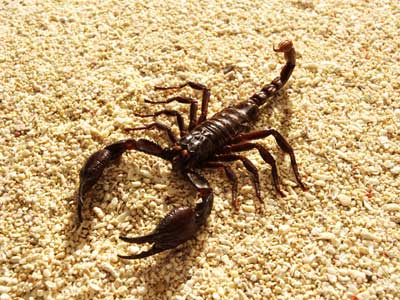
Scorpion

Scorpions are predatory arthropod animals of the order Scorpiones within the class Arachnida. There are about 2,000 species of scorpions, found widely distributed south of about 49° N, except New Zealand and Antarctica. The northernmost part of the world where scorpions live in the wild is Sheerness on the Isle of Sheppey in the UK, where a small colony of Euscorpius flavicaudis has been resident since the 1860s. The word scorpion derives from Greek – skorpios.

Carpet Beetle

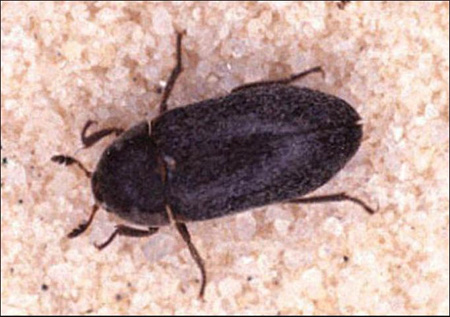
Dermestidae are a family of Coleoptera that are commonly referred to as skin beetles. Other common names include larder beetle, hide or leather beetles, carpet beetles, and khapra beetles. There are approximately 500 to 700 species worldwide. They can range in size from 1 to 12 mm. Key characteristics for adults are round oval shaped bodies covered in scales or setae. The usually clubbed antennae fit into deep grooves. The hind femora also fit into recesses of the coxa. Larvae are scarabaeiform and also have setae.

Drug Store Beetle

The Drugstore beetle (Stegobium paniceum), also known as the Bread beetle or Biscuit beetle, is a tiny, brown beetle that can be found infesting a wide variety of products, and is among the most common non-weevils to be found there. It is the only member of the monotypic genus Stegobium. As their name suggests, Drugstore beetles have a tendency to feed on pharmacological products, including prescription drugs. They will also feed on a diverse range of dried foods and spices, as well as hair, leather, books, and museum specimens. They can bore into furniture, and in some cases tin foil or sheets of lead.

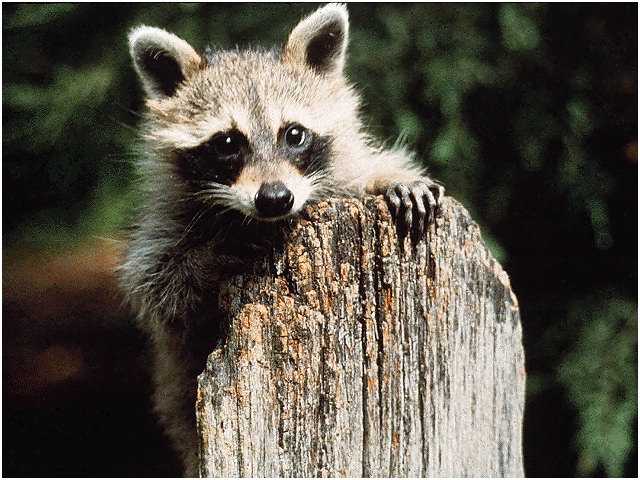
Raccoon

The raccoon (Procyon lotor), sometimes spelled as racoon, and also known as the common raccoon, North American raccoon, northern raccoon and colloquially as coon, is a medium-sized mammal native to North America. As a result of escapes and deliberate introductions in the mid-20th century, raccoons are now also distributed across the European mainland, the Caucasus region and Japan. Their original habitats are deciduous and mixed forests, but due to their adaptability they have extended their range to mountainous areas, coastal marshes, and even urban areas, where some homeowners consider them pests.

Springtails

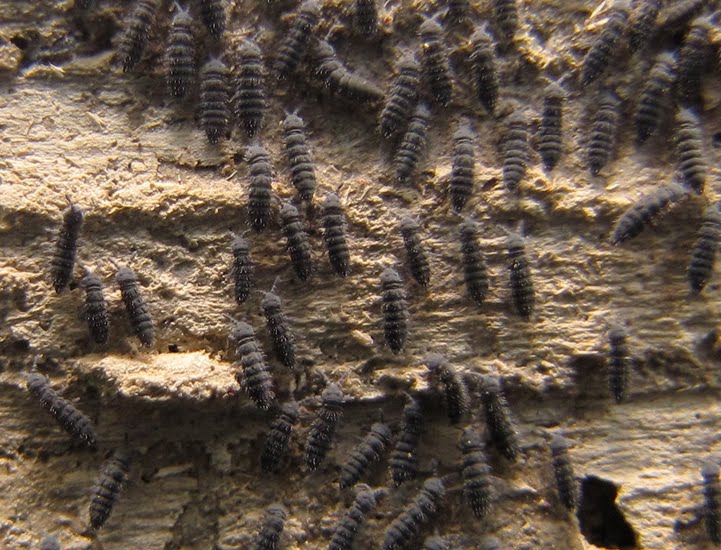
Springtails (Collembola) form the largest of the three lineages of modern hexapods that are no longer considered insects. The other two are the Protura and Diplura. The three orders are sometimes grouped together in a class called Entognatha because they have internal mouthparts, but they do not appear to be more closely related to one another than to insects, which have external mouthparts.